
Preventing overspending before expenses are submitted is a critical component of strong financial governance. Traditional expense systems rely heavily on post-submission audits, identifying issues only after claims have been filed or reimbursed. This reactive approach increases the risk of budget overruns, policy breaches, and unnecessary administrative effort.
Invisible & Frictionless Finance changes this model by embedding preventive controls and proactive monitoring directly into everyday workflows. Overspending is stopped before it occurs, without slowing employees down or introducing additional approval friction.
The most effective way to prevent overspending is to intervene before money is committed. This starts with capturing spending intent at the earliest possible moment.
With ExpenseOnDemand, employees can submit planned or in-progress expenses using voice input, mobile capture, or web forms. The system immediately validates the intended spend against:
If a planned expense exceeds limits, employees receive instant feedback before completing the purchase or submitting a claim. This creates a natural, frictionless checkpoint that prevents overspending without disrupting workflow.
Preventing overspend requires policies to be enforced in real time, not after submission. Invisible & Frictionless Finance embeds policy checks directly into the submission process.
Real-time enforcement includes automatic validation of:
For example, if an employee attempts to book high-value travel or submit an invoice above budget, the system can automatically flag, block, or route the expense for pre-approval. Governance is maintained silently in the background, without relying on manual intervention.
Overspending often stems from fragmented systems and incomplete budget visibility. When expense tools are disconnected from ERP, HR, or accounting platforms, employees and managers lack real-time awareness of available funds.
By integrating expense management with core financial systems, ExpenseOnDemand ensures:
This shared source of truth helps employees make informed spending decisions and reduces unnecessary escalations later in the process.
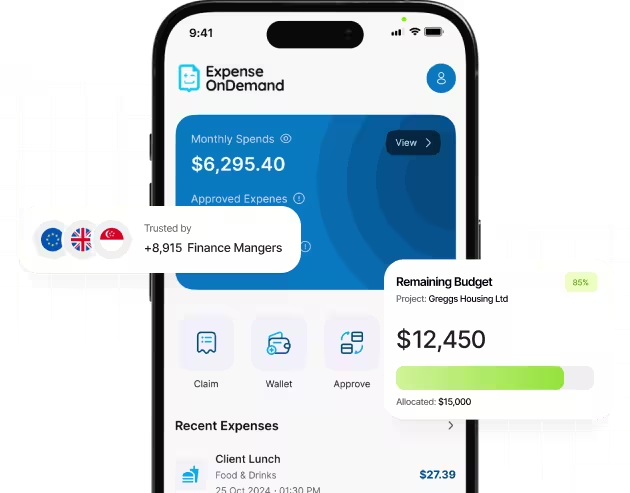
Preventive controls are most effective when paired with continuous monitoring. ExpenseOnDemand provides live dashboards and automated alerts that surface potential overspending early.
Monitoring capabilities include:
These insights allow managers and finance teams to intervene before funds are committed, rather than correcting issues after reimbursement or payment.
Technology alone does not prevent overspending. A culture of financial awareness reinforces automated controls.
Best practices include:
By making rules visible and intuitive within the system, employees naturally stay within budget boundaries, reducing accidental or deliberate overspending without added friction.
Modern expense platforms use AI-driven analytics to identify potential overspending before it happens. ExpenseOnDemand analyzes historical data, behavioral trends, and departmental patterns to forecast budget pressure.
Predictive insights allow finance leaders to:
This shifts spend control from reactive correction to proactive prevention.
Slow approval processes can indirectly encourage overspending by delaying feedback. Automated approval workflows ensure that any expense requiring review is routed instantly.
Seamless approvals provide:
Employees receive clarity quickly, and finance teams maintain control without introducing delays or manual reviews.
Preventing overspending before expenses are submitted requires a combination of early intent capture, real-time policy enforcement, integrated budgets, continuous monitoring, predictive analytics, and automated approvals. When these controls are embedded invisibly into workflows, organizations maintain strong financial discipline without compromising employee experience.
Invisible & Frictionless Finance enables finance leaders to stop overspending before it occurs, rather than correcting it afterward. ExpenseOnDemand exemplifies this approach, delivering pre-emptive, automated, and continuous spend control that protects budgets, ensures compliance, and keeps employees focused on their work, not expense administration.
To learn more about how our spend and expense management software can support your goals, book a demo with us today.
%201.png)