
Unfortunately, expense fraud is a growing challenge, and one that businesses cannot afford to ignore. This is especially in the age of AI, where sophisticated techniques make expense fraud even more difficult to spot.
Even minor misuse can accumulate into significant financial losses over time, erode trust between employees and management, and complicate audits and compliance reviews.
Fraudulent activities can derail operations, erode profits, and damage trust within the organisation. The Association of Certified Fraud Examiners (ACFE) estimates that businesses lose 5% of their annual revenue to fraud.
But it doesn’t have to be this way.
Traditional expense management approaches typically rely on post-submission audits, identifying fraud only after payments are made. This reactive model creates delays, increases manual workload, and allows risk to accumulate unnoticed.
Modern expense management software like ExpenseOnDemand simplify expense approval systems and streamline expense policy management, helping organisations detect and prevent expense fraud.
Invisible & Frictionless Finance transforms fraud prevention by embedding controls, monitoring, and intelligence directly into everyday workflows. Fraud detection becomes proactive, continuous, and largely invisible, stopping issues before they reach finance systems while preserving a smooth employee experience.
In this guide, we’ll explore the types of fraud to watch for, red flags to recognise, and how automation can protect your business.
Fraudulent claims take many forms, some more sophisticated than others.
Below, we outline the most prevalent types of expense fraud and how they impact businesses.
Fictitious claims involve submitting fake or fabricated expenses for reimbursement. This is often done using altered receipts, fake invoices, or false mileage logs.
Example:
A salesperson submits a receipt for a “business dinner” that never occurred, or logs mileage for a personal trip disguised as work-related. Or, an employee attends a client meeting but claims additional meals and transport costs unrelated to the trip.
To combat this, businesses should adopt systems that verify claims through corroborating evidence, such as calendars, email logs, or GPS tracking for mileage. Unchecked, this type of fraud can snowball, especially if multiple employees engage in it. Regular audits, along with automated tools like ExpenseOnDemand, can mitigate these risks by flagging anomalies and ensuring policy compliance.
Submitting the same claim more than once to receive multiple payouts is another common form of fraud. This often happens when paper-based processes or disjointed systems are in place.
Example:
An employee submits a hotel invoice through their expense claim and charges the same amount to their company credit card.
Automated expense management systems can flag duplicate claims instantly, helping businesses avoid paying twice for the same expense.
This category includes inflating costs or misrepresenting the purpose of an expense. These claims are harder to spot, as they often involve real receipts or partial truths.
Example:
An employee who takes a £20 taxi ride submits a receipt claiming £50, pocketing the difference as profit.
Establishing clear expense policies with defined thresholds and requiring detailed receipts can help identify and prevent these claims.
Although not inherently fraudulent, human errors can lead to over payments or discrepancies in financial records. Mistakes in manual data entry, such as decimal misplacement or incorrect categorisation, are common.
Example:
An employee accidentally selects the wrong project code when submitting an expense, charging it to the wrong department.
Automation minimises such errors, ensuring data accuracy and reducing opportunities for fraud disguised as mistakes.
Sometimes employees submit claims for personal expenses, either accidentally or intentionally. This can include personal meals, entertainment, or even luxury items.
Example:
An employee purchases a new laptop for personal use but lists it as a “business expense.”
Clear communication of acceptable expenses, combined with regular oversight, can reduce these instances.
This is the latest and most difficult type of expense fraud to deal with. Employees use AI to generate fake receipts that look totally legitimate and pass them off as real.
Example:
An employee sends a receipt for a coffee and food order while on the road, but the receipt is pure AI forgery and in fact, they prepared food at home before their trip.
This type of expense fraud is very hard to manage. The best way to combat AI expense fraud is to utilise expense cards and spend management software that integrate with one another. Any spend on an expense card is then reconciled with the spend tool, making it impossible for employees to claim on made up purchases.
Through ExpenseOnDemand's partnership with Pliant Expense Cards, we can offer this exact solution. Employees make purchases using Pliant cards. These purchases are then fed into our spend management system. Finance teams see all purchases in real-time, so employees simply cannot pretend they've made transactions when they really haven't.
Expense fraud can have devastating effects on an organisation, leading to financial losses, diminished trust, and a tarnished reputation. But with the right tools in place, businesses can not only prevent fraud but also streamline operations and enhance compliance.
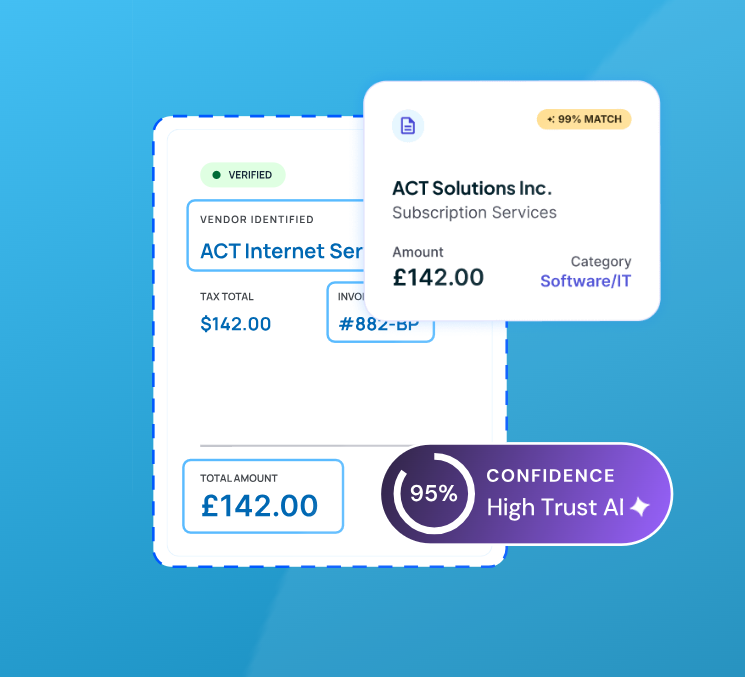
One of the most effective ways to reduce fraud is to intervene before an expense becomes a transaction.
Capturing spend intent early allows systems to validate claims before money is committed.
Platforms like ExpenseOnDemand use voice input, mobile capture, and AI-assisted submission to validate expenses at the moment they are created.
This enables the system to:
By embedding fraud detection directly into the submission process, organisations prevent fraudulent or erroneous claims from entering accounting or AP systems, rather than investigating issues after the fact.
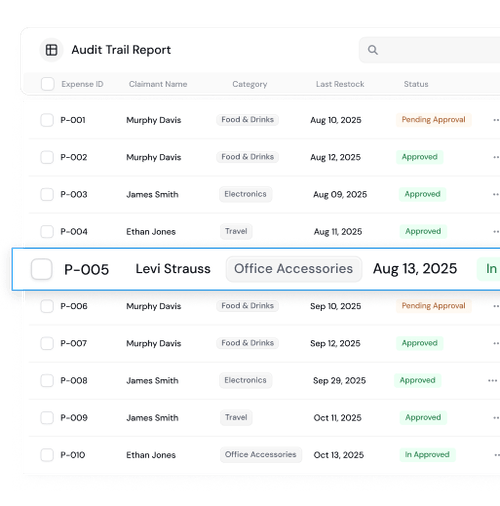
Traditional fraud prevention depends heavily on audits and manual checks.
Invisible & Frictionless Finance replaces this with preventive controls that operate automatically within workflows.
Preventive controls typically include:
Manual approvals can lead to errors, delays, and opportunities for fraudulent claims to slip through. ExpenseOnDemand eliminates this risk with automated approval workflows. Predefined rules also ensure that claims outside of policy thresholds are flagged for managerial review, reducing the likelihood of human oversight errors.
Key features:
- Multi-level approvals based on claim size or category.
- Automatic rejection of claims missing required documentation.
- Notifications to approvers for quick action on flagged claims.
This approach creates silent oversight, where fraudulent activity is stopped early without slowing legitimate spending or approvals.
Through these embedded controls, ExpenseOnDemand allows businesses to track expenses in real-time, providing an immediate view of all submitted claims. This transparency ensures that no claim goes unchecked, and any discrepancies can be flagged immediately. By monitoring expenses as they occur, finance teams can detect and address potential fraud before it escalates.
Example:
An employee submits a claim for travel expenses that exceeds the typical amount for the specified route. The system flags the anomaly, prompting a review before their reimbursement is approved.
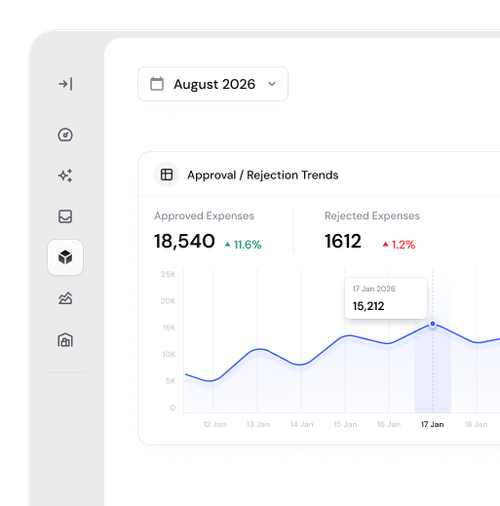
A strong defense against fraudulent claims starts with understanding your spending patterns.
ExpenseOnDemand provides comprehensive analytics and reporting, helping organisations identify trends and anomalies over time.
Beyond individual claims, analytics provide organisation-wide insight into spending behaviour.
Finance leaders can monitor trends across teams, locations, and categories to identify emerging risks.
Benefits of analytics:
- Spot recurring offenders who consistently make errors or inflate claims.
- Analyse department-specific trends to pinpoint areas of concern.
- Gain insights into average expenditure, enabling realistic policy limits.
- Real-time departmental and regional spend visibility
- Early detection of unusual patterns
- Proactive intervention before payments occur
Data transparency empowers businesses to make informed decisions and address potential fraud systematically. By surfacing insights through reporting, finance teams maintain oversight without creating bottlenecks or additional reporting overhead.
Fraud prevention does not end at submission. Continuous monitoring and reconciliation ensure that all spend is validated as it occurs.
Continuous reconciliation allows organisations to:
By surfacing anomalies in real time, finance teams can intervene before payments are processed, dramatically reducing the likelihood of fraudulent claims slipping through.
Where this can work very well is with one of the most common types of reimbursement fraud: submitting the same claim multiple times. ExpenseOnDemand's advanced algorithms continuously scan claims for duplicates, ensuring that no two reimbursements are processed for the same expense.
Example:
An employee submits a receipt for a hotel stay through their online claim system and also attaches it to their company credit card statement. The system detects the duplicate and prevents an overpayment from occurring.
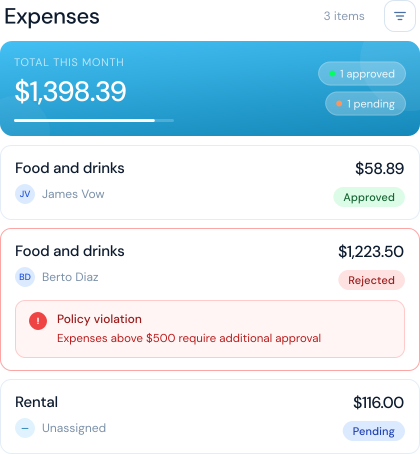
Modern expense platforms use AI and machine learning to detect fraud patterns that manual reviews often miss. These systems analyse historical data and behavioural trends to identify suspicious activity.
ExpenseOnDemand allows businesses to customise their expense policies and integrate them directly into their AI system. Employees are required to adhere to these guidelines, and any out-of-policy claims are flagged immediately.
Policy enforcement features:
- Hard stops for non-compliant claims.
- Automated reminders for missing documentation, such as receipts.
- Predefined spending caps for specific categories, such as meals or travel.
By embedding policy enforcement into the expense management workflow, organisations reduce the likelihood of personal purchases or inflated expenses being reimbursed.
With AI-driven monitoring operating invisibly in the background, fraud detection becomes continuous without requiring finance teams to run manual audits or reports. Common fraud indicators detected by AI include:

Fraud risk increases when systems are fragmented and data is inconsistent.
Disconnected expense tools, HR platforms, and accounting systems create gaps that can be exploited. ExpenseOnDemand integrates seamlessly with accounting and ERP systems, ensuring a streamlined data flow. This reduces the risk of manual errors or fraudulent entries during reconciliation.
Deep integration ensures:
Integration also supports a unified view of financial data, making audits easier and more accurate.
ExpenseOnDemand integrates natively with accounting platforms such as Xero, Microsoft Dynamics 365 Business Central, and Sage, maintaining master data integrity and enforcing governance invisibly across systems.
When employees know their claims are closely monitored and backed by automation, they’re less likely to attempt fraud. Employees are also more likely to comply when policies are clear and systems are easy to use.
Here at ExpenseOnDemand, we champion a culture of accountability, where both employees and managers have visibility into the expense process.
Effective cultural measures include:
When systems are frictionless and transparent, employees are less inclined to attempt fraudulent submissions, as the process itself is efficient, accurate, and trusted
However, even with a strong expense culture in place, there are still clear warning signs of fraudulent claims to look out for:
- Claims submitted without receipts or with vague descriptions.
- Patterns of excessive spending or frequent small claims just below approval thresholds.
- Expense reports that don’t align with business activities, such as meetings or trips.
- Duplicate claims or recurring errors from the same employees.
Regularly reviewing claims for these indicators can help finance teams address fraud before it escalates.
Reducing fraudulent expense claims requires a proactive, continuous, and largely invisible approach.
Organizations must combine early intent capture, preventive controls, continuous reconciliation, AI-powered monitoring, system integration, and employee education to stop fraud before it happens.
Our process of Invisible & Frictionless Finance ensures these safeguards operate quietly in the background, delivering end-to-end fraud prevention while keeping employee experience smooth, approvals fast, and financial data accurate.
Fraud management shifts from reactive investigation to embedded prevention, strengthening compliance, trust, and operational efficiency across the organisation.
Book a demo with ExpenseOnDemand to discuss the specifics of your expense fraud problems, and discover how exactly our software can help you.
Expense fraud refers to the act of submitting false or exaggerated claims to receive unauthorised reimbursement. It can range from inflating costs on a genuine receipt to creating completely fake expenses – unlike honest mistakes or human errors, fraud involves deliberate intent to deceive.
In essence, it’s theft disguised as legitimate claims, and businesses of all sizes are at risk.
Without proper controls, these fraudulent activities can go undetected for months, even years, leading to significant financial and reputational losses.
What are the consequences of committing expense fraud?
The fallout from expense fraud can be severe, affecting both individuals and businesses.
- Financial losses: Fraudulent claims can drain company resources, harming profitability and impacting other areas of operation.
- Legal penalties: Submitting or reimbursing false claims may breach tax laws, resulting in fines, audits, or worse.
- Reputational damage: Fraud undermines trust among employees, clients, and stakeholders, potentially tarnishing the company’s image.
- Operational strain: Investigating fraud takes time and resources, diverting attention from core business objectives.
For employees, committing reimbursement fraud can result in termination, loss of professional credibility, and legal consequences, including criminal charges.
Why individuals commit expense fraud
Understanding the motives behind expense fraud doesn’t necessarily help to prevent it, but it can illuminate the situation, and establish things in their wider context. Common reasons include:
- Financial pressure: Struggling with personal finances, some employees see fraud as a solution to their problems.
- Lack of oversight: Weak internal controls create opportunities for fraud to occur unnoticed.
- Entitlement mentality: Some individuals rationalise their actions, believing they deserve extra compensation.
- Opportunity: Fraud thrives when systems rely on outdated manual processes, or lack robust monitoring.
Expense fraud occurs when an employee intentionally submits false, inflated, duplicated, or non-compliant expenses for reimbursement or company payment. This can include anything from altered receipts to personal purchases being claimed as business costs.
The most frequent examples of expense fraud include duplicate claims, inflated mileage, modified or fake receipts, and submitting personal expenses as business-related. Policy violations—such as exceeding spending limits or claiming out-of-policy items—are also a major contributor.
Preventing expense fraud requires a combination of clear policies, real-time visibility, and automation. Businesses should enforce structured expense policies, require digital receipt capture, and implement customised approval workflows. Using an expense management platform ensures that claims are validated before submission rather than audited after the fact.
A receipt scanner app creates an immediate, digital record of every transaction. By capturing merchant, date, and amount data automatically, it reduces manual entry errors and makes it much harder to submit altered or duplicate claims. It also strengthens audit trails and improves compliance.
A mileage tracker eliminates guesswork by automatically recording journeys and calculating distances. This prevents employees from inflating mileage and ensures reimbursement is based on accurate, policy-compliant data.
Customised approval workflows ensure that every expense is reviewed according to company policy before it is approved. By routing claims through the right stakeholders and applying predefined rules, businesses can stop non-compliant or suspicious expenses early in the process.
Yes. Modern expense management software can flag unusual spending patterns, detect duplicate submissions, and enforce policy compliance automatically. This reduces the need for manual checks and helps finance teams focus only on exceptions that require attention.
Real-time visibility allows finance teams to see spend as it happens, not weeks later. This makes it easier to identify anomalies, enforce budgets, and intervene before fraudulent or non-compliant expenses are processed.
Not always. While some cases are deliberate, many instances of expense fraud come from unclear policies or poor processes. This is why prevention should focus on clarity, automation, and guidance—not just enforcement.
The most effective long-term approach is to prevent issues before they happen. This means capturing spend at the source, enforcing policies automatically, and minimising manual input. A unified expense management system like ExpenseOnDemand helps businesses move from reactive audits to proactive control.

%201.png)